Monday, 7 July 2014

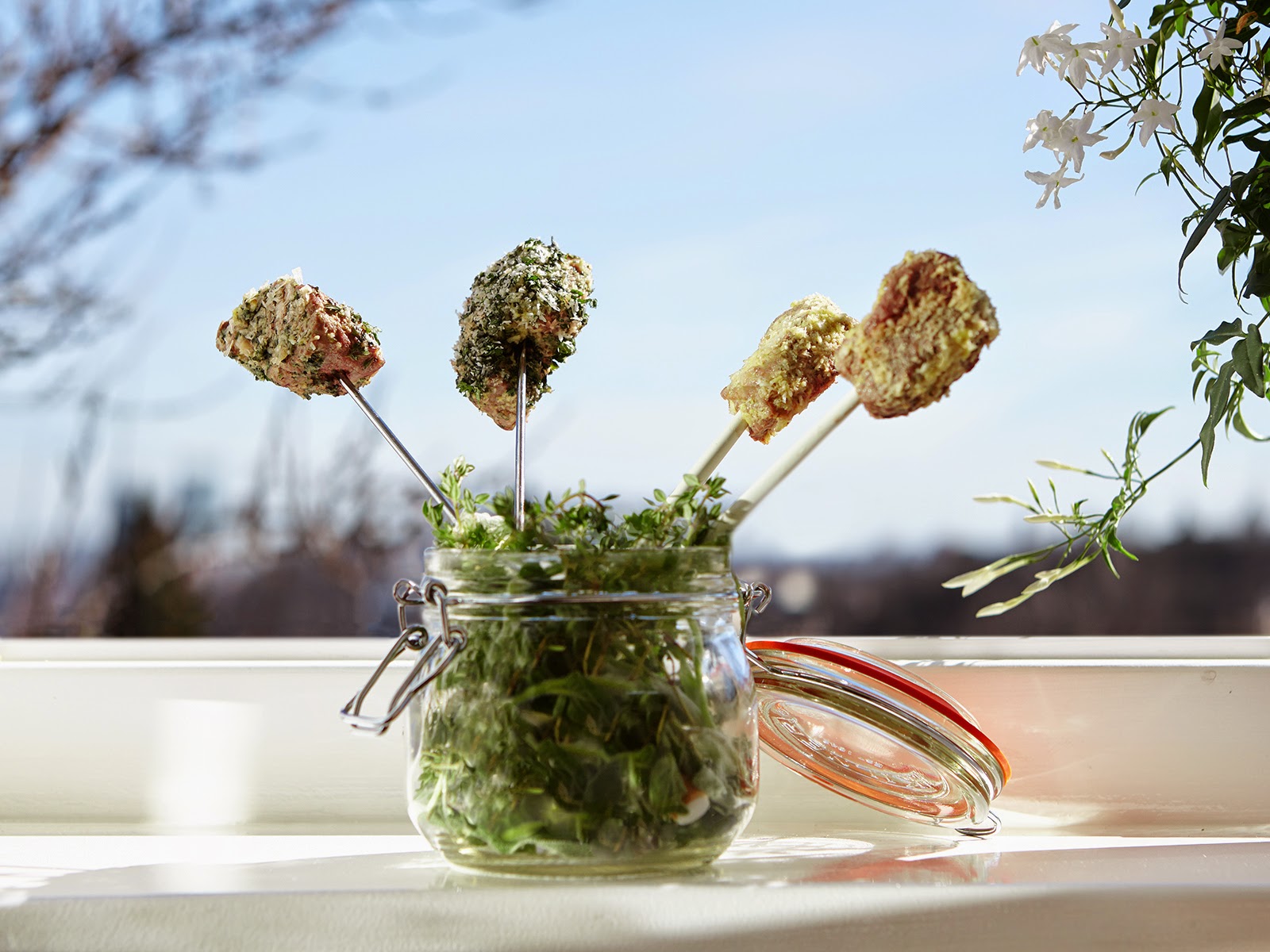
Summer, lamb and a glass jar


A variation on the theme....


Herbs and coconut coated lamb confit cooked in a jar 
Ingredients:
500 g French rack of lamb
500 ml sunflower oil

50 ml coconut oil
40 gr Dijon mustard
20 gr dried coconut
15 gr estragon
15 gr oregano
15 gr thyme
15 gr coriander
15 gr sage
a pinch of Maldon smoked salt flakes
a pinch of freshly ground black pepper
a pinch of freshly ground dried chilly peppers
2 cloves of garlic

a small shallot
Method:
Take the lamb rack out of the fridge at least 20 minutes before start cooking. With a sharp knife cut in between the ribs, then separate the meat from the bone, creating nice round sirloin pieces.
Fill glass jars ¾ with sunflower and coconut oil, close them, place them into large casseroles, cover with water and bring to 70 degrees temperature.
Chop very finely the herbs leaves and then put them on a piece of paper to absorb a bit the moisture. Mix with the coconut. In the meantime brush the meat with the mustard and then cover it with the herbs, pressing well so it creates a tight coating. Leave on the side a pinch of chopped herbs and mix them with salt, pepper and chilly.
Very quickly remove the jars from the casserole, open them and toss the lamb in it . Close and put them back in the water and let it simmer at 70 degrees for 17/18 minutes.
Serve with the salted herbs seasoning and a bit of balsamic reduction


Sunday, 15 June 2014

Street food in Florence and first Italian Icecream


I spent seven happy years of my life living in Tuscany. I was living in Siena but often travelled to Florence, where some of my best friends were living.
If someone were to ask me for the most typical Florentine dish, my answer would be simple: panini di lampredotto. Round bread rolls, opened up and filled with steaming hot lampredotto, topped with salsa verde or piccante. It is a dish and a tradition only found in the city of Florence.

Lampredotto (the fourth stomach of a cow, technically known as the abomasum in English) is not easily found in other cuisines, but the Florentines have been preparing it for centuries as a quick, cheap and easy meal. It is best loved as a hearty, hot sandwich filling, making this Renaissance fast food a classic of today’s Florentine street food scene.
It is also one of my favourite Florentine comfort foods, so it absolutely was one of the things I wanted to taste again in a recent trip back to Tuscany: of course i went to taste it at Nerbone, an historical lampredottaio.


If you haven’t tried it, you can’t miss the lampredottai throughout the streets and markets of Florence. Making it at home if you live outside of offal-loving cultures could be tricky too, in this case it might be best to befriend a good quality butcher and ask for it specially. In Florence, the lampredottai will also sell you the already cooked lampredotto by weight to take home, ready to be heated up and eaten as you like.
But preparing it at home is easy and cheap. Contrary to what some people might think, lampredotto (and tripe in general), also makes a healthy and nutritious meal – those watching their waist lines may be interested to know that it even has less calories than a chicken breast.


Here is a typical receipt for the preparation of the lampredotto. You can serve it on mini wholegrain bread buns to make it even tastier and healtier (they are normally served on regular sized white buns with a crunchy crust and soft white inside) with a salsa verde, taken from Pellegrino Artusi’s 1891 cookbook, of course. Dipping the top of the bun into the pot of broth where the lampredotto was cooked is essential for a nice, hot, juicy panino.


Lampredotto panini
1 – 1.5 kg will make about 8 hearty panini or 20 or so mini ones. You don’t often find lampredotto in small portions as it is generally sold whole so if you have leftovers, you can either freeze it or think about some creative use for the lampredotto – one of my favourite restaurants in Florence makes a ravioli filling from lampredotto. 


Ingredients:

For the lampredotto:

  • 1 kg lampredotto (abomasum tripe)
  • 3 litres of water
  • 1 stalk of celery
  • 1 brown onion
  • 1 carrot
  • 1 tomato
  • 4 of 5 whole black peppercorns
  • salt


For the salsa verde:


  • 1-2 anchovy fillets
  • ¼ onion
  • ½ garlic clove
  • large bunch of parsley
  • a handful of basil leaves
  • 2-3 heaped tablespoons of capers, rinsed
  • lemon juice
  • extra virgin olive oil


Method:

For the lampredotto:
Prepare a broth by roughly chopping the vegetables and adding them to the water in a large pot with a generous amount of salt and the peppercorns. Bring to the boil and allow to simmer for about 30 minutes. Add the lampredotto, whole, and cook until soft, covered with a lid. The cooking time is really a case of checking and testing, it may take about one hour. Make sure the lampredotto is always submerged under the broth, you can add more water as necessary. Keep the lampredotto warm, in the broth until you are ready to use it.
For the salsa verde:
Chop the anchovies, onion, garlic, capers and herbs together finely (with a knife or a food processor) and add olive oil and lemon juice to bind it into a paste-like consistency. This is the part where you then taste, see and decide what else needs to be added or adjusted. It should be, as it’s name suggests, very green, so you can add plenty of parsley, which is the sauce’s main ingredient. Season with salt and pepper.
Artusi, as usual, is quite vague with his measurements and inevitably, the recipe for salsa verde changes from household to household. My mother in law, for example, adds fine breadcrumbs to thicken and bind it slightly, some like to add hard-boiled egg to the mix, while personally I like to leave out the garlic and put in an extra bit of anchovy.
To assemble the panini:
Part of the joy of eating street food is watching the performance of it being prepared right in front of you. The lampredottai will take out a huge piece of lampredotto from one of his steaming pots, and on a chopping board, will roughly slice and chop enough to generously heap onto the panino. The bread rolls are normally, split open in half and a bit of the bread in the middle is taken out to have more space for the filling.
A heaped spoonful of salsa verde usually goes on top of the lampredotto (though this is to the customer’s taste) and it is seasoned with extra salt and pepper. At the request of the customer, the lampredottaio will dip the top half of the roll in the broth to soak up some juicy goodness (required, if you ask me) and the ready panino di lampredotto is handed over in a paper napkin.
Absolutely delicious.


p.s. on the way back from Florence we stopped to let Elias, my 8 months old son, have the first taste of Italian ice cream. It is a mile stone in the gastronomical education of any respectable Italian baby boy.



Wednesday, 4 June 2014

Sous-vide entrecote


Elias, my 8 months old son, is growing 4 beautifully sharp teeth.  So, since we are making sure that he eats virtually anything, i decided to get some great looking beef entrecote and work on it the magics of Sous-Vide cooking. I thought that if he's going to taste meat for the first time should be juicy, tasty, tender, full of proteins and fragrant. That is exactly what sous-vide tecnique is able to achieve with great meat. You can totally control the doneness of the meat, getting an evenly medium rare piece of delicious beef with the aroma of spring herbs.
A fresh salad as a side dish (in this case is just toasted pine nuts and pumpkin seeds, some cucumber, sun dried tomatoes, spring onions, fresh mint and radishes) and we got a fantastic dinner, of astonishing simplicity.


Ingredients

280 gr beef entrecote

cilantro

rosemary

thyme

basil

lemon balm

borage

5 gr  farmer's butter

Maldon smoked salt flakes

freshly ground pepper


Method


Preheat the Sous-Vide supreme to 56,5 c. In a pouch place the entrecote steak, previously seasoned with freshly ground pepper. Add some butter and the herbs. Vacuum seal and place it in the water oven for up to 6 hours. 
Preheat a pan, remove the steak from the pouch and sear for 30 seconds each side, season with the salt flakes and a drop of EV olive oil.
You can also pour the juices left in the pouch onto the hot pan and let it reduce to create a sauce to add to the steak when serving.


Sunday, 18 May 2014

Spicy red lentils with coriander by Marketa


Lentils are believed to bring along money. Sadly, I am still waiting for the cash, but one thing is sure: lentils bring along many benefits on the healthy nutrition side. Compared to other types of dried beans, they are relatively quick and easy to prepare. Lentils readily absorb a variety of wonderful flavors from other foods and seasonings, are high in nutritional value and are available throughout the year. My friend Marketa Tomkova, a young talented woman, mother of two, who is a great cook and has been extremely helpful and a great source of inspiration while this blog was shaping up, came over one day and made this amazing soup. There is a deep richness given by the matching of lentils and coconut milk, there are nuances of distant countries given by the spices and there's the final kick of chilly peppers and cilantro. I have been hunting Marketa for some time to get the recipe and finally is here. You will be reading more about her on this blog. For the moment enjoy this simple yet full of flavors recipe

Ingredients 


250 g red lentils 
2 carrots, chopped or grated 
1 red onion, finely chopped 
2 cloves garlic, finely chopped 
1 small piece fresh ginger, grated 
2 handfuls of fresh coriander pokrájeného 
250 g fresh or canned chopped tomatoes 
1.2 liters vegetable stock 
2 dl coconut milk 
1 tablespoon lemon juice 
2 tablespoons coconut or olive oil 
1.5 tsp turmeric 
1 teaspoon cumin 
1 chilli pepper 
salt


Procedure


1) In a pot, heat the oil. Add the cumin, turmeric and chilli. On low heat, stirring constantly fry for half a minute, and then into the pot, add the onion, carrot, ginger and tomatoes.
2) After a minute, add the rinsed lentils and vegetable broth. Slightly salt and cook for 25 minutes. If the liquid evaporates, add a little water.
3) Add the coconut milk and lemon juice over low heat and cook for 5-10 minutes.
4) Stir in the fresh coriander to taste Dosolo and season with lemon juice. Serve hot.


Thursday, 15 May 2014

Perfect burger as a melting pot experience


One of the things i like the most about making your own burger is that you can play with it and you have virtually endless options: from the seasoning of the meat to the consistence of the bun, from the type of sauce to the garnishing of the burger. Prague has seen quite few quality burger joints opening in the last couple of years, and some butchers are offering excellent burger patties ready to be grilled. 
From time to time i am going to have fun with combinations and alternatives to the classic burger, exploiting my passion for quality street food. 
This one was a combination which has been highly appreciated ( i did not make the burger patty, i bought it from a great butchery) and i like to think of it as a melting pot of ingredients:

Ground beef from Czech raised animals, handpicked by an English gentleman

Perfect buns made in Czech by a passionate "home baker"

Guanciale ( pork cheek), a very typical Italian preparation made by a Czech girl with passion for quality meat and Italy

Red onions from Tropea, south of Italy

Goat cheese from Sardinia

Macedonian Lutenica...


Sunday, 4 May 2014

Vica Kerekes: Pörkölt, erős paprika and the importance of passion in life.


Few things can bring together people the same way food, and especially "food talk", does. I have been living abroad for about 15 years now and still, whenever i mention my Sardinian and Italian origins, people talk to me about how amazing the food they had in my homeland was, how much they miss good mozzarella or fresh seafood, how great it was to eat dinner in a small Osteria where the local "grandma" was still making handmade pasta.
Food it's a great tool to rely to each other, to understand foreign cultures, to break ice and create new friendships.
My friendship with Vica Kerekes started and grew thanks to our common passion for food. She is a friend of my fiancee and i first met her when, after a photo shoot, they came to the restaurant i previously owned. Vica is Slovak and Hungarian and i lived in Budapest for two years in the past, and there i learned to love Hungarian food. So the talk went soon to the gastronomical subject: of course Italian food, then Hungarian spicy paprika, and then we went on to discuss the quintessential importance of enjoying life and to have passion for what you do, wether is cooking, acting or simply spending time with your friends. 
When this blog started to take shape i threw around the idea of cooking something together and that idea began reality:  Vica came over to meet Elias (my newly born son), have a glass of wine while chatting with my fiancee and, last but not least, cooking one of my favorite Hungarian traditional dishes: a pork and beef Pörkölt with, as she specified when i asked for the ingredients, erős paprika (spicy)!
When i had the Pörkölt in Hungary, it came with a side of Tarhonya, a type of pasta which reminded me of something we have in Sardinia, called Fregula. So we made a sort of Hungarian-Sardinian fusion and while Vica cooked the Pörkölt i made the Fregula with tomatoes and oregano.
The recipe of the Fregula will soon be on. 
The recipe of the amazingly spicy Pörkölt cooked by Vica, a real triumph of the red color, from the many shades of the ingredients to the hair of the gracious guest chef, is written further in this post.

Jò étvàgyat!


Ingredients:


  • 40g Mangalica lard
  • 1 large red onion, thinly sliced

    2/3 cloves of garlic, unpeeled
  • 2–3 tbsp ground hot paprika
  • 1.8kg pork steak, diced

    200 g beef, diced
  • 1 tsp tomato paste
  • 3 paprika peppers, thinly sliced
  • 3 medium tomatoes, sliced

    8/10 cherry tomatoes

    2/3 glasses red wine
  • salt and freshly ground black pepper
  • 1 tbsp cornflour


Method:


  1. Heat the lard in a lidded frying pan, add the onion and the garlic and fry for five minutes, or until softened. Remove the pan from the heat and stir in the paprika, adding more or less to taste. Add the pork and the beef and a splash of red wine. Simmer over a low heat for about 5 minutes.
  2. Add enough boiled water to cover the meat, bring back to the boil and add the tomato purée, paprika peppers and tomatoes. Season with salt and freshly ground black pepper. Cover with a lid and simmer for 1 and a half hour or until the meat is tender.
  3. To thicken the sauce, mix the cornflour and two tablespoons of cold water to form a paste, then stir into the stew. Bring to the boil again to thicken. Check the seasoning, and season with salt and freshly ground black pepper to taste.